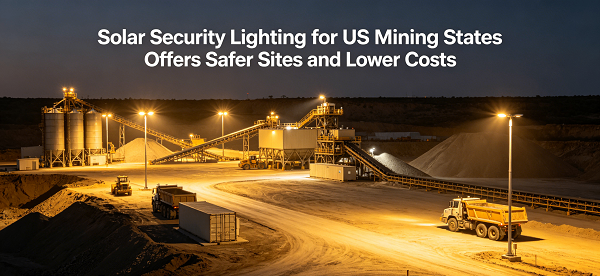
Solar Security Lighting for US Mining States Offers Safer Sites and Lower CostsPosted by Stephen Shickadance in Most Popular. Industry News. The Basics. Inspiring Projects. Applications of Solar Lighting.From Nevada to West Virginia, mines are switching to solar light towers – and seeing immediate improvements in safety, operating expenses, and environmental compliance Across the United States, mining operations face a common set of challenges: remote locations, rising diesel prices, strict safety regulations, and mounting pressure to reduce emissions. Whether it’s gold in Nevada, coal in West Virginia, copper in Arizona, or lithium in North Carolina, the need for reliable, cost‑effective site lighting has never been greater.
Across the United States, mining operations—from Alaska’s frigid remote sites to Arizona’s sun-drenched deserts, and from Colorado’s high-altitude mines to West Virginia’s rugged coalfields—face a universal challenge: balancing site security, worker safety, and operational costs. For decades, diesel-powered light towers have been the go-to solution for illuminating mine perimeters, haul roads, stockpiles, and work zones. But as U.S. oil prices continue to rise, and regulatory pressure for safer, more sustainable operations intensifies, mining operators are turning to solar security lighting as a game-changing alternative. This shift isn’t just about going green—it’s about creating safer worksites, slashing long-term costs, and future-proofing operations across all U.S. mining states. Mining is inherently risky, and poor lighting amplifies those risks exponentially. Dark zones around remote mines invite trespassing, equipment theft, and vandalism, while inadequate illumination for night shifts increases the chance of accidents—from slips and falls to collisions with heavy machinery. For states like Nevada, where mines are spread across vast, isolated desert terrain, and Alaska, where winter nights stretch for hours, reliable lighting isn’t just a convenience; it’s a lifeline for worker safety. Traditional diesel light towers often fall short here: they’re prone to breakdowns in extreme weather, require constant refueling (a logistical nightmare in remote areas), and produce uneven light that leaves critical zones unprotected. Solar security lighting is emerging as the solution of choice for forward‑looking mining companies. By eliminating fuel logistics, reducing maintenance, and providing consistent high‑output illumination, solar light towers deliver safer sites and lower costs – all while helping mines meet their ESG goals.
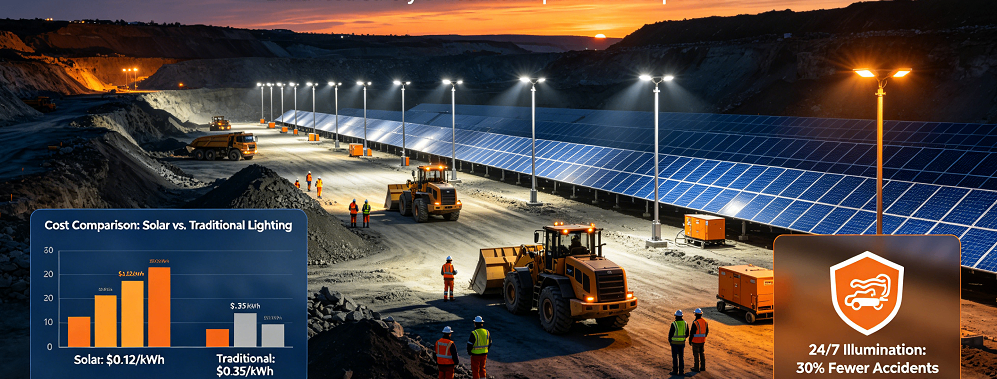
The Safety Imperative: Lighting Prevents AccidentsPoor illumination is a direct contributor to mining accidents – particularly powered haulage and machinery incidents, which account for the majority of mining fatalities nationwide. In 2025, powered haulage accidents killed 13 miners across the US. Six miners died in machinery accidents. These incidents often occur on haul roads, at loading zones, and around equipment staging areas – places that require consistent, high‑quality lighting. Solar light towers provide:
For mine operators, this means fewer accidents, lower liability, and a safer work environment for every shift. The Cost Advantage: Zero Fuel, Minimal MaintenanceDiesel light towers impose a heavy financial burden that grows worse with every fuel price spike. In early March 2026, diesel prices jumped 85.9 cents per gallon nationwide in a single week, reaching $4.59 per gallon. For remote mines, delivered diesel costs are often 50–100% higher than the national average. Solar light towers eliminate fuel expenses entirely. A typical mine running 20 diesel towers spends $150,000–$300,000 on fuel alone over five years, plus tens of thousands more on maintenance, refueling labor, and fuel storage compliance.
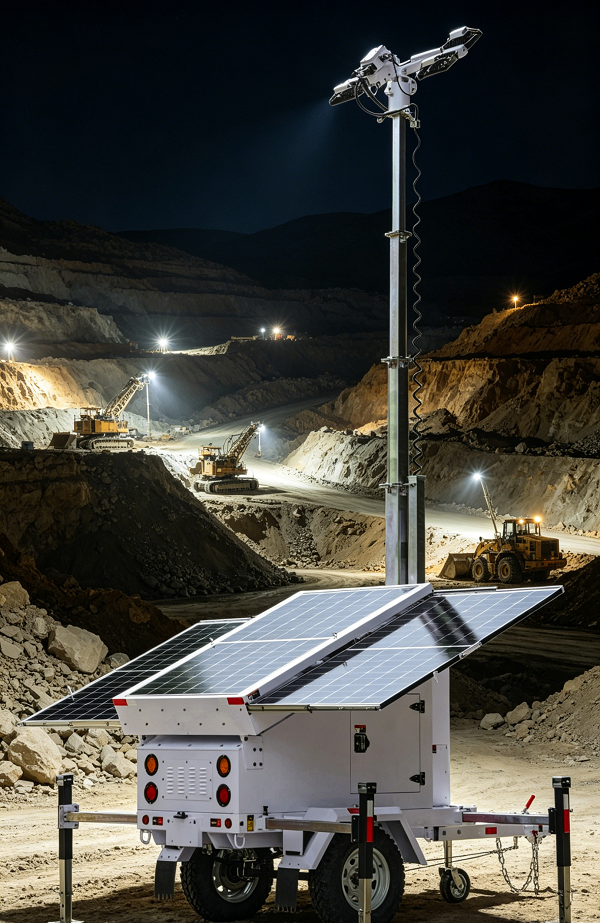
Built for the Toughest Mining Environments Mining sites are dusty, vibration‑prone, and subject to extreme temperature swings. Solar light towers are engineered to thrive in these conditions:
Whether it’s the frozen tundra of Alaska, the high desert of Nevada, or the humid heat of Alabama, solar towers deliver reliable, maintenance‑free lighting year‑round. Real Mining States, Real ResultsWest Virginia – Coal Country SafetyA West Virginia underground coal mine replaced 10 diesel light towers with solar units. The mine eliminated weekly fuel deliveries on icy mountain roads, reduced maintenance labor by 90%, and improved illumination along haul roads – directly addressing the leading cause of accidents in the state. Nevada – Gold Mining LogisticsA gold mine on the Carlin Trend, 60 miles from the nearest fuel terminal, switched 15 diesel towers to 12 solar towers after a lighting simulation. Annual savings exceeded $100,000, and the mine now operates with zero noise complaints from nearby ranchers. Arizona – Copper and Tribal LandsA copper mine on tribal land deployed solar towers with concrete‑free, mobile mounting. The solution preserved ground integrity, eliminated exhaust fumes, and provided silent operation for night shifts – all while qualifying for the 30% ITC. Alaska – Extreme Cold ReliabilityAn interior Alaska gold mine, where winter temperatures drop to -40°F, replaced six diesel towers with solar. Gel lead‑acid batteries performed flawlessly without engine block heaters, and the mine saved over $150,000 annually in delivered fuel costs. Environmental and Community BenefitsSolar security lighting aligns with mining’s growing focus on ESG (Environmental, Social, Governance) performance.
The Blueprint for Mining StatesFor mines in West Virginia, Nevada, Arizona, Alaska, Colorado, New Mexico, and beyond, the path to safer, lower‑cost lighting is clear:
Safer Sites, Lower Costs – Starting TodayMining operations across the United States are proving that solar security lighting is not a future technology – it’s a present‑day solution that delivers measurable safety and financial results.
Whether you operate a surface gold mine, an underground coal mine, or a critical minerals project, solar light towers can make your site safer and your bottom line stronger. The savings are even more pronounced in states with strict environmental regulations, like Colorado and California. Diesel light towers produce greenhouse gas emissions, noise pollution, and the risk of fuel spills—all of which can lead to costly fines and damage to a mine’s ESG (Environmental, Social, Governance) reputation. Solar security lighting operates with zero emissions and zero noise, helping mines comply with state and federal regulations while advancing their sustainability goals. For example, a medium-sized mine in Colorado using 6 solar light towers can reduce its carbon footprint by thousands of pounds annually, aligning with the state’s aggressive climate targets while avoiding penalties for non-compliance. What makes solar security lighting so versatile across U.S. mining states is its adaptability to diverse climates and terrains. High-efficiency monocrystalline solar panels—with up to 23% conversion efficiency—maximize energy capture, even in low-light conditions like Alaska’s winter months or Washington’s cloudy skies. Our solar panels are mounted at optimal angles to ensure maximum energy capture year-round. Our systems include GEL lead-acid batteries engineered to withstand ultra-cold temperatures (down to -40°F) and fluctuating weather conditions. These batteries are sealed, maintenance-free, and designed for long-term reliability. An intelligent charge controller prevents overcharging and deep discharge, extending battery life to 5–7 years and reducing maintenance needs. For rental fleets serving U.S. mining states, solar security lighting is also a competitive advantage. Diesel rental units often break down in harsh mining conditions, leading to costly downtime for mines and lost revenue for rental companies. Solar towers have minimal moving parts, reducing breakdown risk and increasing uptime. Their plug-and-play design allows for fast deployment—setup takes hours, not days—making them ideal for dynamic mining sites that shift as extraction progresses. Rental companies that offer solar light towers can attract more clients by providing a more reliable, cost-effective solution than outdated diesel units. Real-world examples across U.S. mining states highlight the impact of solar security lighting. A gold mine in Nevada replaced 8 diesel light towers with 6 solar units and cut monthly fuel costs by $6,000—recouping their investment in just 18 months. A coal mine in West Virginia used solar lighting to illuminate its perimeter, reducing theft incidents by 70% and improving worker safety scores. In Alaska, a remote zinc mine relied on solar towers to maintain 24/7 lighting during winter, avoiding costly fuel deliveries and ensuring uninterrupted operations. As U.S. oil prices continue to fluctuate and safety regulations become stricter, solar security lighting is no longer an optional upgrade—it’s a necessity for mining operators across the country. It’s a solution that checks all the boxes: safer worksites, lower costs, compliance with environmental standards, and adaptability to every mining climate. Whether you’re operating in the frozen north of Alaska, the arid deserts of Arizona, or the mountainous terrain of Colorado, solar security lighting delivers consistent performance, long-term savings, and peace of mind. For U.S. mining states, the future of site security and cost efficiency is solar. By making the switch, mining operators aren’t just reducing expenses—they’re creating safer, more sustainable operations that can thrive in an increasingly competitive and regulated industry. Solar security lighting isn’t just a light tower; it’s an investment in the safety of workers, the profitability of operations, and the future of mining across America. Ready to Make the Switch?Contact us today for a free, no‑obligation lighting simulation for your mine. We’ll model your site, recommend the optimal tower configuration, and provide a side‑by‑side cost comparison – including the 30% ITC credit
Most Popular
Industry News
The Basics
Inspiring Projects
Applications of Solar Lighting
|
ArchivesNo Archives Categories
Want More Info? |
LATEST NEWS & ARTICLES